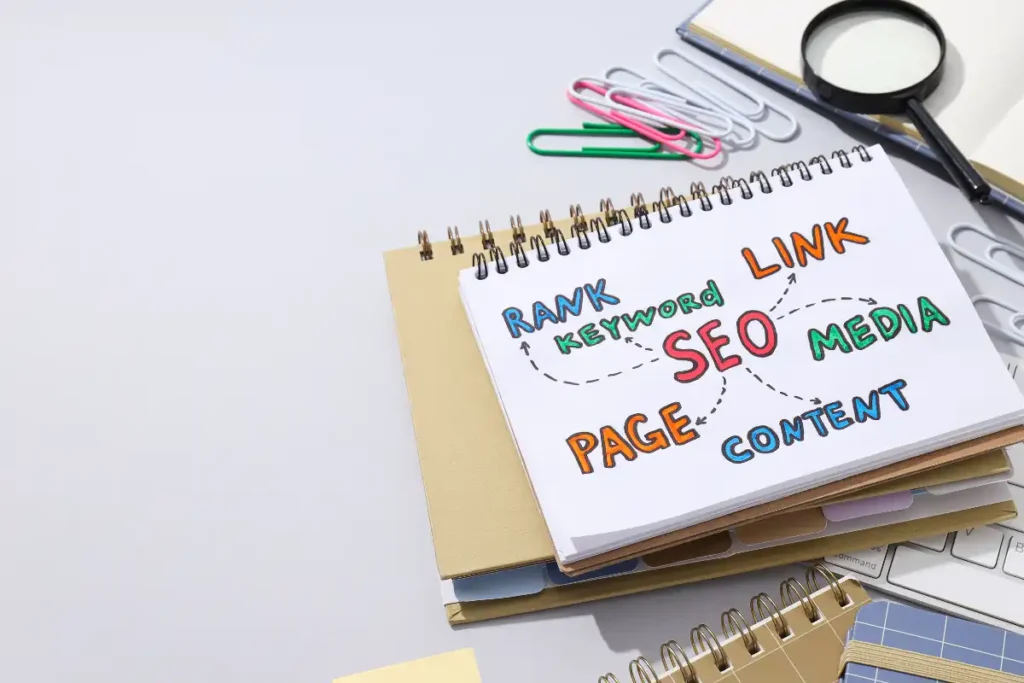
Search Engine Optimization (SEO) in 2026 is no longer just about ranking higher on Google. Today, SEO affects whether your website appears in traditional search results, Google AI Overviews, local search packs, and AI-driven tools that summarize answers and cite trusted sources.
This guide explains how SEO works in 2026, what matters most, and how to build an SEO strategy that drives consistent organic traffic and qualified leads over time.
Key Takeaways
- SEO works best when you optimize for search intent, not just keywords.
- Modern SEO is a system: content, technical performance, authority, and measurement.
- AI-driven search rewards content that is structured, definition-led, and easy to cite.
- Internal linking and clear site structure help search engines discover and understand your most important pages.
What Is SEO?
Search Engine Optimization (SEO) is the process of improving your website so search engines can discover, understand, and rank your pages for relevant searches. The goal is to increase organic visibility and bring the right people to your site without paying for every click.
SEO generally falls into three major categories:
- Content: Creating helpful pages that match what people are searching for.
- Authority: Earning trust signals like backlinks, brand mentions, and reviews.
- Technical performance: Making your site fast, crawlable, and user-friendly on every device.
Why SEO Still Matters in 2026
Search remains one of the highest-intent channels in marketing. People use search engines when they actively need answers, services, or products. That makes SEO traffic exceptionally valuable.
Sustainable Traffic
Unlike paid ads, SEO can continue to drive traffic long after a page is published. Strong pages build momentum and can attract visitors for months or years.
Higher Credibility
Organic results often carry more trust than ads. Ranking well signals that your business is established and relevant.
Better User Experience
Good SEO practices improve the experience for users by making your site faster, easier to navigate, and easier to understand.
Lower Customer Acquisition Costs Over Time
While SEO requires upfront investment, it often produces a lower long-term cost per lead compared to paid advertising.
How Search Engines Work
Search engines follow a predictable process to discover and rank pages. Understanding this process helps you optimize more effectively.
Crawling
Search engine bots discover pages by following links and reading sitemaps. If a page is not linked internally, it may be difficult for search engines to find.
Indexing
After discovery, search engines analyze the page’s content and store it in an index. Pages that are thin, duplicated, blocked by technical settings, or confusingly structured may not be indexed well.
Ranking
When someone searches, search engines rank pages based on relevance, usefulness, and trust. Ranking signals include content quality, backlinks, page performance, and user experience.
How SEO Has Changed in 2026
SEO has shifted away from “keyword-first” tactics and toward systems that prioritize intent, clarity, and authority.
Modern SEO Versus Outdated SEO
| Outdated Approach | Best Practice in 2026 |
|---|---|
| Keyword stuffing | Intent-driven, natural language content |
| Publishing thin articles at scale | Publishing comprehensive, genuinely helpful content |
| Chasing backlinks by volume | Earning fewer, higher-quality authority links |
| Desktop-only optimization | Mobile-first usability and performance |
| Optimizing only for blue links | Optimizing for AI summaries, local packs, and answer-first search |
The Core Components of SEO
Successful SEO strategies include four main areas working together. If one area is weak, overall performance suffers.
On-Page SEO
On-page SEO improves how well an individual page communicates its topic and value to both users and search engines.
Key on-page elements include:
- Title tag and meta description
- Clear heading structure
- Helpful, complete content that matches intent
- Internal links to related pages
- Image alt text and media optimization
Technical SEO
Technical SEO ensures search engines can crawl, render, and index your site efficiently. It also ensures visitors have a fast, stable experience.
Common technical priorities include:
- Fast load time and strong Core Web Vitals
- Mobile-friendly design
- Indexation and crawl control (robots, noindex, canonicals)
- XML sitemap and logical URL structure
- HTTPS security
- Fixing broken links and crawl errors
Off-Page SEO
Off-page SEO strengthens your site’s credibility. The strongest off-page signal is high-quality backlinks from reputable sites, but brand mentions, reviews, and online reputation also matter.
Measurement and Iteration
SEO improves through measurement, testing, and consistent updates. Without tracking, you cannot know what is working.
Keyword Research and Search Intent
Keyword research identifies how your audience searches. In 2026, the most important part is understanding search intent.
The Four Types of Search Intent
- Informational: learning something
- Navigational: finding a specific site or brand
- Commercial: comparing options
- Transactional: ready to take action
Pages that match intent tend to outperform pages that only target keywords.
Content That Ranks and Gets Cited by AI
AI-driven search surfaces information that is easy to extract, summarize, and trust. If your content is unclear, unstructured, or vague, it is less likely to be featured or cited.
Recommended Content Blocks
Definition Block
Definition: SEO is the process of improving your website so search engines can discover, understand, and rank it for relevant searches.
Step-by-Step Block
- Choose a topic based on real search demand.
- Write a page that directly answers the main question.
- Add supporting sections that address related questions.
- Link to related pages on your site.
- Improve speed, mobile usability, and indexation.
- Measure performance and update the content regularly.
Quick Answer Block
Quick answer: SEO results typically take 3–6 months, but improvements can appear sooner depending on competition, site quality, and content velocity.
Internal Linking and Site Structure
Internal linking helps search engines discover your pages and understand how topics relate. It also spreads authority from high-performing pages to important service or conversion pages.
Internal Linking Best Practices
- Link important pages from your navigation and from related content.
- Use descriptive anchor text that matches the destination topic.
- Avoid excessive linking in one paragraph. Spread links naturally.
- Ensure every important page has at least a few internal links pointing to it.
Local SEO
If you serve customers in specific locations, local SEO can be the most profitable form of SEO. It improves visibility for searches that include a location or “near me.”
Local SEO Essentials
- Optimize your Google Business Profile
- Keep name, address, and phone number consistent across directories
- Earn reviews and respond consistently
- Create location-focused pages and content
- Build relationships for local mentions and backlinks
Tools You Should Use
| Tool | What It Helps With | Best For |
|---|---|---|
| Google Search Console | Indexing, queries, click-through rate, coverage issues | Technical SEO and visibility tracking |
| Google Analytics | Traffic sources, engagement, conversions | Measuring outcomes and ROI |
| Screaming Frog | Crawling your website for errors and opportunities | Technical audits |
| SEMrush / Ahrefs | Keywords, competitors, backlinks | Strategy and competitive analysis |
Common SEO Mistakes to Avoid
- Ignoring intent: targeting keywords without matching what users want.
- Publishing thin pages: content that does not answer the question fully.
- Slow performance: poor speed and Core Web Vitals limiting rankings and conversions.
- Weak internal linking: important pages not connected to the rest of the site.
- Outdated tactics: keyword stuffing, buying links, or duplicating content at scale.
How Long SEO Takes
SEO typically takes 3–6 months to show meaningful gains, but timing varies depending on competition, your site’s current condition, and how consistently you publish and improve content.
New sites may take longer, while established sites can often gain traction faster if technical issues and content gaps are addressed.
Frequently Asked Questions
What is SEO in simple terms?
SEO is the process of improving your website so it shows up higher in search results when people search for related topics, products, or services.
How long does SEO take to work?
Most sites see meaningful improvement in 3–6 months, though some pages may improve sooner depending on competition and site quality.
Is SEO still important with AI search tools?
Yes. AI systems still rely on trusted websites as sources. Clear, well-structured pages are more likely to be cited in AI-generated answers.
What are the most important SEO ranking factors?
The biggest factors include content quality and relevance, strong technical performance, authoritative backlinks, mobile usability, and clear site structure.
Can small businesses succeed with SEO?
Yes. Small businesses often win by focusing on local SEO, targeting niche searches, and publishing content that directly addresses customer questions.
Next Steps
If you want quick momentum, start here:
- Fix major technical issues (speed, indexing, mobile usability).
- Create or improve your most important service pages.
- Publish content that answers the top questions your customers ask.
- Add internal links so every important page is easy to find.
- Track results in Google Search Console and update content monthly.